A practical starting point for buyers who need a mesh specification that production, quality, and installation teams can all work from.
Choosing welded wire mesh starts with four decisions: the opening, wire diameter, material, and supply format. A mesh that works for a garden boundary may be unsuitable for a machine guard, an animal enclosure, or a concrete reinforcement project. Even products sold under the same nominal size can differ in stiffness, coating coverage, and finished dimensions.
This guide explains the main types of welded wire mesh, how to read mesh sizes, and what to confirm before requesting a quotation. If you already have a drawing, compare our welded wire mesh rolls and welded wire mesh panels, then send the specification for review.
What Is Welded Wire Mesh?
Welded wire mesh is a grid of longitudinal and cross wires joined by resistance welding at their intersections. The welded joints hold the wires in position and help maintain consistent square or rectangular openings during handling and fabrication.
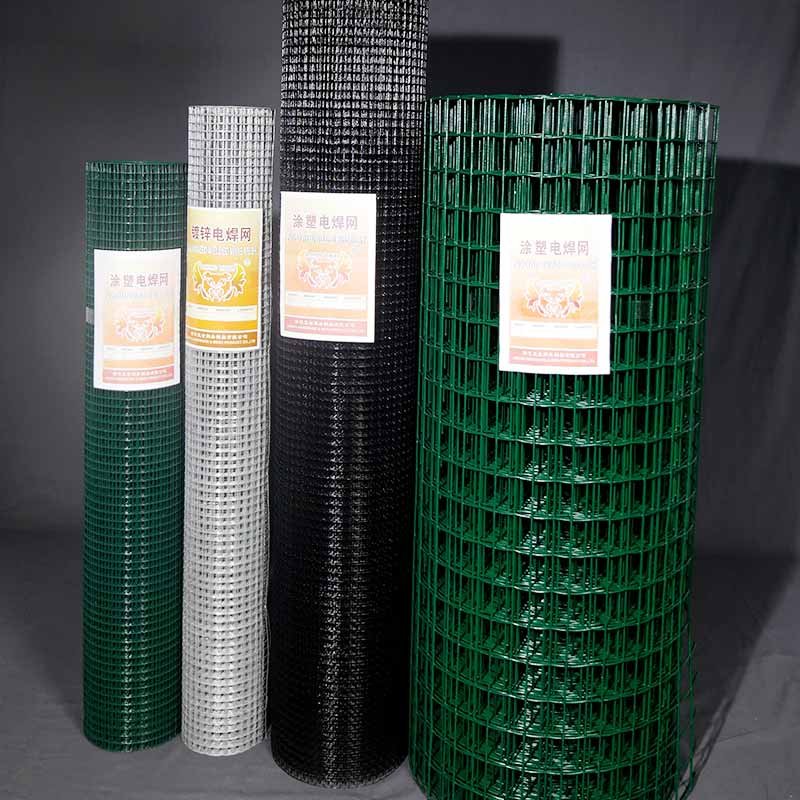
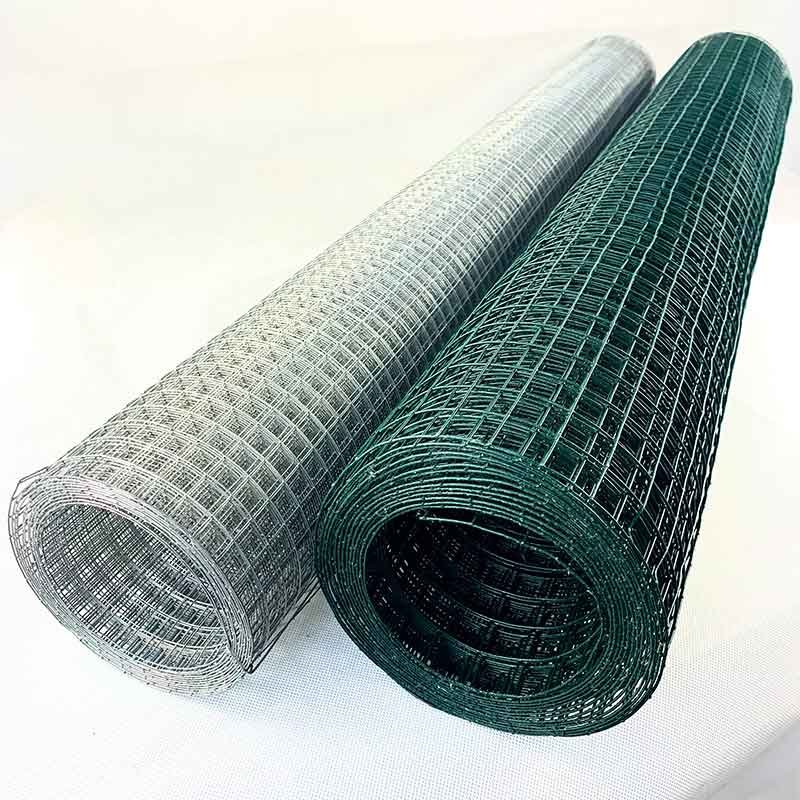
It is supplied in rolls or flat panels, with options including carbon steel, galvanized steel, PVC-coated galvanized steel, and stainless steel. The suitable combination depends on the required rigidity, exposure conditions, installation method, and intended use.
Unlike woven wire mesh, which interlaces wires, welded mesh fixes the intersections together. This can help with cutting and forming individual sections, but finished stiffness and joint performance still depend on the wire diameter, spacing, weld quality, and support arrangement.
Welded Wire Mesh Rolls vs. Panels
The first practical choice is whether to order continuous rolls or individual sheets. Format affects transport, installation, and how much work is needed to achieve a flat finished surface.
| Factor | Rolls | Panels |
|---|---|---|
| Supply form | Continuous mesh wound into a roll | Flat sheets supplied individually or in bundles |
| Typical selection reason | Covering longer runs and cutting sections on site | Building flat infill sections, partitions, or fabricated components |
| Handling | Compact for transport; requires unrolling and sometimes flattening | Retains a flat sheet format; larger panels need suitable handling equipment |
| Installation considerations | Confirm fixing spacing, edge treatment, and any flattening requirements | Confirm panel dimensions, edge projections, support spacing, and fixing details |
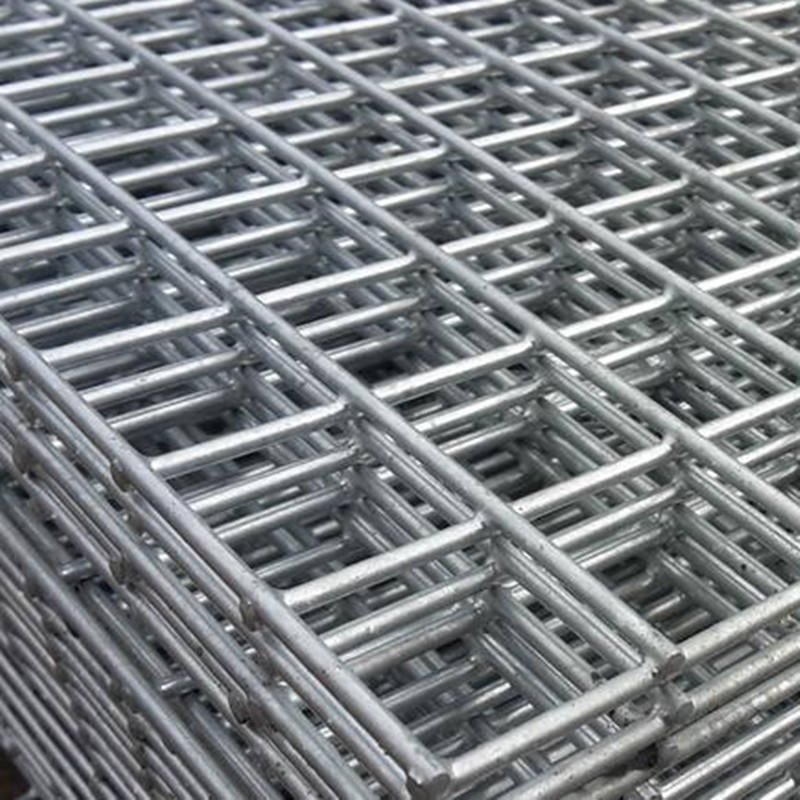
Panels are often selected for stiffer assemblies, but panel format alone does not establish strength. Compare actual wire diameters, opening sizes, weld requirements, and the complete installed design.
Types of Welded Wire Mesh by Material and Finish
Uncoated Carbon Steel Welded Mesh
Uncoated, sometimes called black, steel mesh is an option for further fabrication or subsequent finishing. Without suitable protection, it can rust when exposed to moisture. If the finished component will be painted, coated, or galvanized, confirm the production sequence and surface preparation before ordering.
Galvanized Welded Wire Mesh
Galvanized mesh uses a zinc coating to protect the steel. The term covers different processes, so a quotation should identify both the coating method and whether galvanizing takes place before or after welding.
- Galvanized before welding: coated wire is welded into mesh. The welding process can affect zinc coverage around the intersections.
- Galvanized after welding: the completed mesh is galvanized, allowing the process to coat the welded assembly, including the intersections.
Also distinguish electro-galvanizing from hot-dip galvanizing. Coating thickness, coverage, exposure, and handling damage all affect corrosion performance. Request the required coating specification rather than relying only on the word “galvanized.”
PVC-Coated Welded Wire Mesh
PVC-coated mesh adds a polymer layer over the underlying wire mesh. It is commonly chosen for fencing and landscape applications where appearance and an additional protective layer matter. Confirm the base wire finish, coating thickness, color, adhesion, and suitability for outdoor exposure.
Ask whether the quoted diameter refers to the steel core or the overall coated diameter. A thicker outer coating does not replace the mechanical contribution of the steel wire underneath.
Stainless Steel Welded Wire Mesh
Stainless steel is an option where cleanliness, corrosion resistance, or the service environment makes a zinc or polymer coating less suitable. Grade selection matters: 304 and 316 are different materials, and neither is a universal answer for all chemicals, temperatures, or chloride exposure.
For demanding conditions, provide the medium, concentration, temperature, cleaning method, and exposure details. Food-contact suitability and other regulated uses also require the relevant material and fabrication documentation.
How to Read Welded Wire Mesh Sizes
Clear Opening vs. Wire Pitch
The clear opening is the gap between adjacent wires. The pitch is the distance from the center of one wire to the center of the next. For adjacent wires of equal diameter, pitch equals clear opening plus wire diameter.
For example, a 25.4 mm clear opening with 2.0 mm wire has a 27.4 mm center-to-center pitch. If 25.4 mm instead describes the pitch, the clear opening is 23.4 mm. A purchase order that says only “1-inch mesh” can therefore leave room for disagreement.
Common Nominal Opening Sizes
These inch-to-millimeter conversions are useful when comparing specifications. They are reference dimensions, not a statement that every opening is available with every wire diameter or finish.
| Nominal inch dimension | Exact metric equivalent | Confirm before ordering |
|---|---|---|
| 1/4 inch | 6.35 mm | May be rounded to 6.4 mm in product tables |
| 1/2 inch | 12.7 mm | State clear opening or pitch |
| 3/4 inch | 19.05 mm | May be rounded to 19.1 mm |
| 1 inch | 25.4 mm | Specify tolerance as well as nominal size |
| 1 1/2 inches | 38.1 mm | Distinguish exact conversion from a nominal 38 mm specification |
| 2 inches | 50.8 mm | Do not assume it is identical to a 50 mm requirement |
Wire Diameter and Gauge
Wire diameter affects weight and stiffness. A larger diameter generally increases rigidity for an otherwise comparable mesh, but the complete result also depends on spacing, welds, material properties, and support conditions.
Specify diameter in millimeters whenever possible. If using gauge, identify the system, such as BWG or SWG; the same gauge number can represent different diameters in different systems. For coated products, state both the core diameter and finished diameter when needed.
Overall Dimensions and Edges
For rolls, state width and length. For panels, state width, length, and how the edges should finish. Flush-cut edges and projecting wires may suit different fabrication methods. Include acceptable dimensional tolerances, flatness requirements, and the direction of rectangular openings on a drawing.
Common Applications and What to Specify
Fencing and Garden Boundaries
Match the opening, wire diameter, height, and finish to the boundary function. The posts, fixing method, ground conditions, and support spacing are part of the installed system. For a defined perimeter fencing design, flat welded mesh panels may be more practical than roll mesh that needs flattening and framing.
Poultry and Animal Enclosures
Consider the animal’s size and behavior, possible predators, and the need to prevent escape or injury. Opening size alone is not enough: wire strength, joints, edge protection, anchoring, and the overall enclosure design also matter. Do not treat a generic mesh size as suitable for every species or predator risk.
Machine Guards and Industrial Partitions
Specify the hazard, access requirements, opening size, distance from moving parts, and support design. Mesh selection should follow the applicable guarding requirements for the installation. A welded sheet by itself is not a verified machine-guarding system.
Concrete Reinforcement
Reinforcement mesh must meet the structural design and applicable project standards. General fencing mesh is not automatically suitable for structural concrete. Confirm steel grade, wire properties, weld performance, dimensions, and the required inspection or test records with the project engineer.
How to Choose Welded Wire Mesh for Your Order
- Define the function. Explain what the mesh must contain, separate, support, or protect, and whether the application has specific safety or structural requirements.
- Describe the environment. Include indoor or outdoor use, moisture, salt exposure, chemicals, temperature, and cleaning conditions.
- Set the opening and wire diameter together. Confirm the measurement convention, diameter tolerance, and any required strength or weld tests.
- Choose material, finish, and format. Compare rolls with panels, and identify the coating process or stainless steel grade.
- Confirm fabrication and inspection details. Include edges, flatness, cut sizes, test requirements, and the method for accepting the finished goods.
- Compare the delivered specification. Check quantities, unit weights, packing, destination, and trade terms before comparing prices.
A lower price can reflect a smaller steel core, a lighter coating, a shorter roll, or different tolerances. Compare quotations against the same written specification so the cost comparison reflects the product you intend to receive.
What to Include in a Welded Wire Mesh RFQ
Copy this checklist into your enquiry to help suppliers assess the requirement:
- Application and installation environment
- Base material and grade, where specified
- Clear opening or pitch in both directions
- Wire diameter and tolerance; core and finished diameters for coated wire
- Galvanizing process, coating requirements, or stainless steel finish
- Roll width and length, or panel width and length
- Edge treatment, flatness, and fabrication drawings where applicable
- Quantity, packing, labeling, and inspection requirements
- Delivery destination, requested trade terms, and required timing
Example enquiry: “Please quote 200 rolls of welded wire mesh for an outdoor boundary: 25.4 × 25.4 mm clear opening, 2.0 mm steel wire, hot-dip galvanized after welding, 1.0 m wide × 25 m long per roll. Please confirm achievable tolerances, coating specification, packing, production timing, and freight options to our destination.” This is an example of an RFQ format, not a stock or availability commitment.
Frequently Asked Questions
Is welded wire mesh the same as hardware cloth?
The terms can overlap. In some markets, hardware cloth refers to smaller-opening wire mesh, often supplied in rolls. The name alone does not establish the construction, material, opening, or wire diameter. Compare the actual specification.
Will galvanized welded wire mesh rust?
It can. Zinc helps protect the steel, but coating thickness and condition, exposure, cut edges, and installation damage affect performance. Confirm the galvanizing process and coating requirement for the environment rather than expecting every galvanized product to perform the same way.
Is PVC-coated welded mesh better than galvanized mesh?
It depends on the application. PVC adds color and a protective outer layer, while the underlying wire and metallic coating still matter. Compare core diameter, coating quality, exposure requirements, and the risk of mechanical damage.
Can welded wire mesh be cut to size?
Yes. The appropriate cutting method depends on the wire diameter and material. Specify required edge quality and protection for exposed steel where relevant. Cut-to-size panels can reduce site work, but dimensions and tolerances should be agreed before production.
Should I order rolls or panels?
Choose rolls when continuous coverage and transport efficiency suit the job. Choose panels when flat sections, defined edges, or fabrication requirements are more important. Then compare the mesh specification and complete installed design.
Discuss Your Welded Wire Mesh Requirements
Horizon Metal offers welded wire mesh in rolls and flat welded mesh panels with material, finish, and dimensional options confirmed against the order requirement.
Send your drawing or the specification checklist above through our wire mesh enquiry form. Include the quantity and destination so our team can review the product details and prepare a relevant quotation.