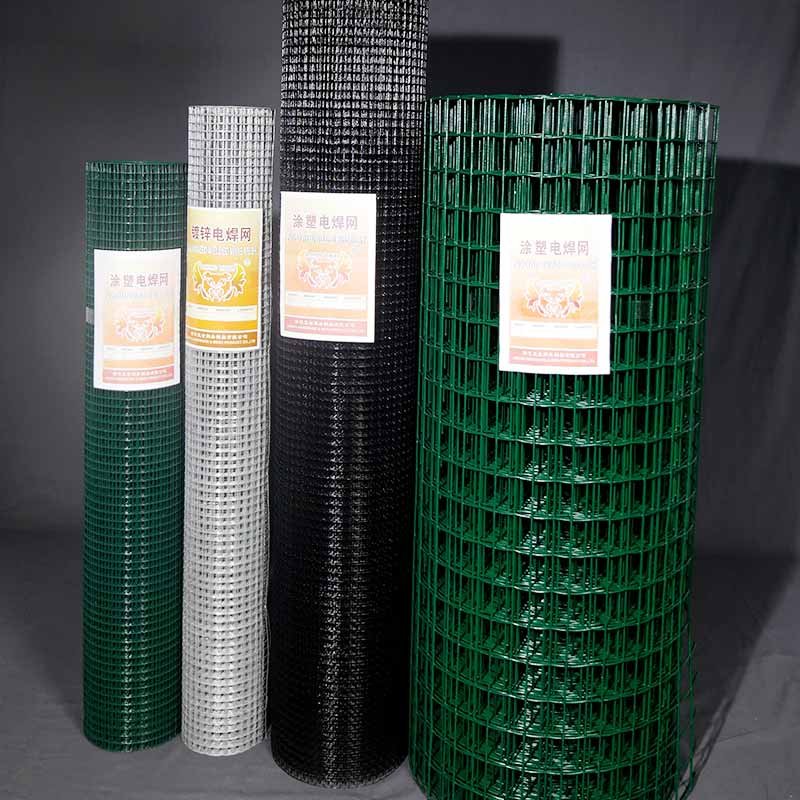
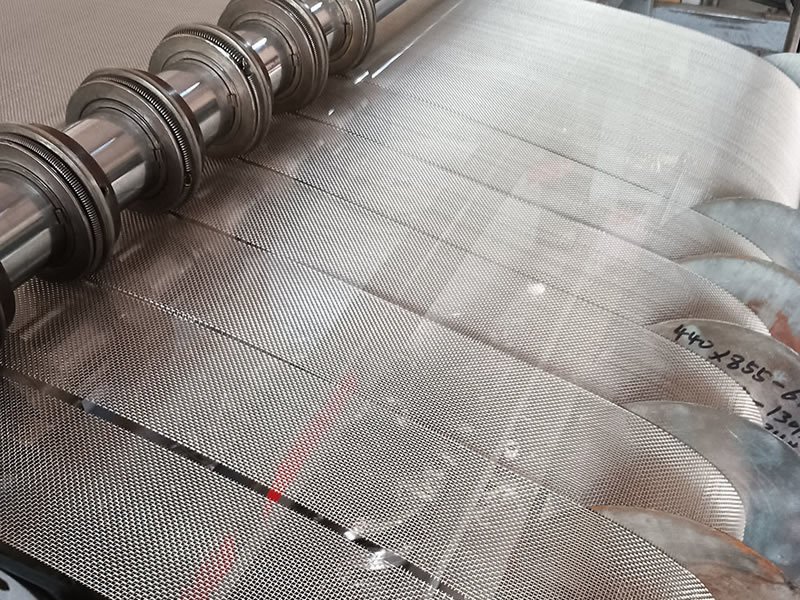
A practical starting point for buyers who need a mesh specification that production, quality, and installation teams can all work from.
Introduction
Choosing the right wire mesh is not simply a matter of selecting a hole size. Mesh count, opening dimensions, wire diameter, open area, material grade, and manufacturing structure all influence the performance of a finished product.
Whether you need wire mesh for industrial filtration, mining screens, construction reinforcement, security fencing, or architectural applications, understanding these specifications can help prevent costly purchasing mistakes.
This comprehensive wire mesh size chart explains common mesh dimensions, how to calculate opening sizes, the differences between woven and welded structures, and how to select the right material for your operating environment.
As an industrial wire mesh manufacturer, Horizon Metal supports standard and customized mesh requirements, helping distributors, OEMs, contractors, and industrial buyers match product specifications with real application conditions.
1. Understanding Wire Mesh Sizes and Specifications
Before using a wire mesh size chart, it is important to understand the three basic measurements that define most wire mesh products:
- Mesh Count: The number of openings per linear inch, commonly used for woven wire mesh.
- Opening Size (Aperture): The clear distance between adjacent wires, measured from the inside edge of one wire to the inside edge of the next.
- Wire Diameter: The thickness of the individual metal wire used to manufacture the mesh.
These measurements are closely related, but they are not interchangeable. Two products with the same mesh count can have different opening sizes if their wire diameters are different. Similarly, two meshes with identical openings may have different strength and open-area characteristics.
Mesh Count vs. Opening Size
For square woven wire mesh, mesh count is generally measured by counting the openings along a one-inch linear distance. A higher mesh count usually means smaller openings, assuming the same general construction. However, wire diameter must also be considered.
Opening Size = (25.4 ÷ Mesh Count) − Wire Diameter
Opening size and wire diameter are in millimeters; mesh count is per linear inch. For example, a 20-mesh woven wire cloth with a 0.40 mm wire diameter has a nominal opening size of:
25.4 ÷ 20 − 0.40 = 0.87 mm
This calculation is useful for preliminary specification comparisons. Actual manufactured dimensions should be confirmed against the supplier’s technical specifications and applicable tolerances.
2. Wire Mesh Size Chart: Mesh Count, Opening and Wire Diameter
The following wire mesh size chart provides representative combinations for square plain-woven wire mesh. The values are illustrative reference combinations, not universal industry standards or a guarantee of available stock. Different manufacturers may supply different wire diameters for the same mesh count.
Common Woven Wire Mesh Size Chart
| Mesh Count (per inch) | Wire Diameter (mm) | Approx. Opening (mm) | Typical Application |
|---|---|---|---|
| 2 × 2 | 1.60 | 11.10 | Coarse screening |
| 4 × 4 | 1.00 | 5.35 | Industrial screening |
| 8 × 8 | 0.80 | 2.38 | Particle separation |
| 10 × 10 | 0.50 | 2.04 | General screening |
| 20 × 20 | 0.40 | 0.87 | Fine screening |
| 40 × 40 | 0.20 | 0.44 | Industrial filtration |
| 60 × 60 | 0.15 | 0.27 | Fine filtration |
| 100 × 100 | 0.10 | 0.15 | Precision screening |
Important: The opening values above are calculated using the nominal geometric formula. They are not certified filtration ratings. Filtration performance also depends on the weave, wire geometry, operating conditions, and test method.
How to Read a Wire Mesh Size Chart
Consider a specification of 40 × 40 mesh with a 0.20 mm wire diameter:
- There are approximately 40 openings per linear inch in each direction.
- The center-to-center spacing is 25.4 ÷ 40 = 0.635 mm.
- The nominal clear opening is approximately 0.435 mm.
- The actual opening should be checked against manufacturing tolerances.
When purchasing industrial mesh, always confirm mesh count, actual aperture, wire diameter, and material grade together.
Wire Mesh Open Area
Open area is another important parameter, especially for filtration, ventilation, and screening. It represents the percentage of the total mesh surface that is open rather than occupied by metal wires.
For square plain-woven mesh with equal wire diameters in both directions:
Open Area (%) = [Opening ÷ (Opening + Wire Diameter)]² × 100
For a 20-mesh product with a 0.40 mm wire diameter, the opening is approximately 0.87 mm and the pitch is 1.27 mm. The approximate open area is (0.87 ÷ 1.27)² × 100 ≈ 47%.
A higher open area generally allows greater flow or screening capacity under comparable conditions. However, it may also reduce the available metal cross-section. The best balance depends on the application, support arrangement, and required mechanical performance.
3. Different Types of Wire Mesh and Their Structures
Not all wire mesh products are manufactured in the same way. Manufacturing structure determines how the wires connect, how the openings behave, and how the mesh performs under different working conditions.
3.1 Woven Wire Mesh
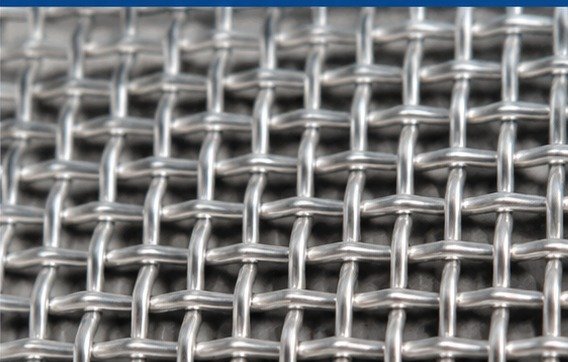
Woven wire mesh is manufactured by interlacing horizontal and vertical wires, similar to the structure of woven fabric. It is widely used in filtration, screening, sieving, and industrial separation.
Plain Weave: Each warp wire passes alternately over and under the weft wires. This is the most common woven structure for general-purpose screening and filtration.
- Uniform square openings.
- Simple and versatile construction.
- Suitable for a wide range of mesh counts.
- Available in different stainless steel and alloy grades.
Twill Weave: Each wire passes over two and under two wires, creating a tighter and more flexible woven structure. It can accommodate finer wires in certain specifications and is suitable for selected fine-filtration applications.
Dutch Weave: Dutch weave uses different wire diameters and wire spacing in the warp and weft directions. Its openings are generally not square and can be extremely small. Common variations include plain Dutch weave and twill Dutch weave.
Applications include liquid filtration, hydraulic filter elements, chemical processing, and fine particle retention. For Dutch weave, buyers should specify warp and weft counts, wire diameters, filtration requirements, and the required test method rather than relying on a conventional square mesh count alone.
Explore our Stainless Steel Woven Wire Mesh solutions for different weave structures and industrial applications.
3.2 Welded Wire Mesh
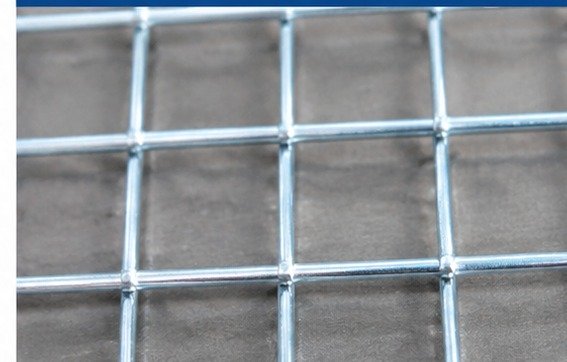
Welded wire mesh is produced by arranging longitudinal and transverse wires in a grid and joining their intersections through resistance welding. Unlike woven mesh, the wires are not interlaced. Their intersections are permanently welded together.
Common specifications include wire diameter, horizontal and vertical wire spacing, mesh opening dimensions, sheet or roll dimensions, and material and surface treatment.
- Stable grid geometry.
- Consistent spacing between wires.
- Good structural rigidity for suitable designs.
- Convenient cutting, fabrication, and installation.
Common applications include industrial fencing, animal enclosures, machine guards, construction reinforcement, partitions, and protective barriers.
Horizon Metal supplies Welded Wire Mesh Rolls and welded wire mesh panels for different enclosure and fabrication requirements.
3.3 Crimped Wire Mesh
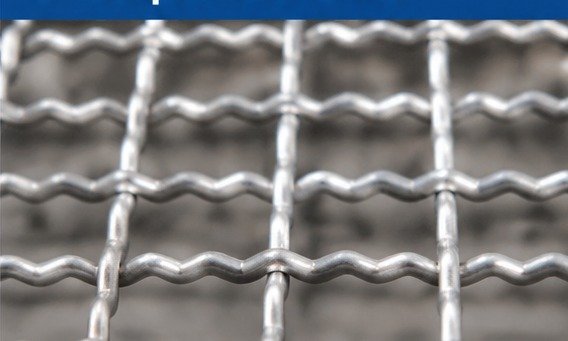
Crimped wire mesh is manufactured using pre-crimped wires that are interlocked at their intersections. The crimping process helps maintain consistent opening dimensions and improves structural stability.
Common structures include double crimp, intermediate crimp, lock crimp, and flat-top crimp. Crimped wire mesh is widely used in mining, aggregate processing, quarrying, and industrial screening.
When selecting crimped mesh, buyers should consider wire diameter, opening size, crimp profile, material hardness, and expected abrasion conditions.
3.4 Other Metal Mesh Structures
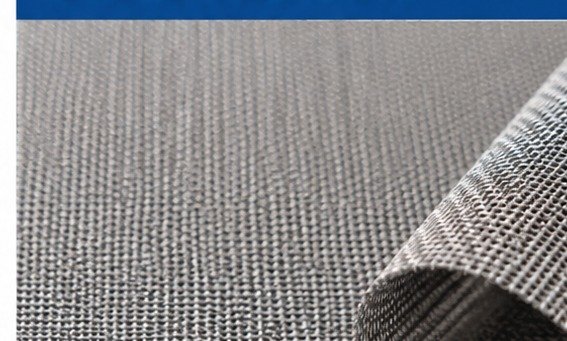
Hexagonal Wire Mesh: Flexible hexagonal openings used for poultry enclosures, agricultural fencing, and gabion structures.
Chain Link Mesh: Interwoven diamond-pattern fencing used for perimeter protection, sports facilities, and industrial boundaries.
Expanded Metal Mesh: Manufactured by slitting and stretching a solid metal sheet to create interconnected openings.
Perforated Metal: Produced by punching or forming holes into a solid metal sheet, with specifications defined by hole diameter, pitch, pattern, and sheet thickness.
These products should not be specified using a conventional woven wire mesh count alone. Explore Horizon Metal’s wire mesh products and Perforated & Expanded Metal categories to compare available structures.
4. How to Select the Right Wire Mesh Material
Choosing the right material is just as important as selecting the correct opening size. Environmental conditions, corrosion exposure, temperature, mechanical loading, and maintenance requirements all affect material selection.
Stainless Steel Wire Mesh
Stainless steel wire mesh is widely used where corrosion resistance, cleanliness, and durability are important.
- 304 Stainless Steel: Suitable for many general industrial environments, screening systems, and applications requiring good corrosion resistance.
- 316 Stainless Steel: Contains molybdenum, which generally improves resistance to chloride-related corrosion compared with 304 in suitable environments.
- 316L Stainless Steel: A low-carbon variation of 316, often selected for applications where welding and corrosion considerations make its properties relevant.
- Duplex Stainless Steel: Grades such as 2205 and 2507 may be considered for demanding environments requiring a combination of strength and corrosion resistance.
Material selection must account for the actual chemicals, chloride concentration, temperature, cleaning agents, and operating conditions. No stainless steel grade is universally corrosion-proof.
View our 304 Stainless Steel Wire Mesh and Stainless Steel & Alloy Wire Mesh for product options.
Galvanized Steel Wire Mesh
Galvanized steel mesh has a zinc coating that helps protect the underlying steel against corrosion. It is commonly used in agricultural fencing, garden fencing, animal enclosures, industrial barriers, and general outdoor applications.
Buyers should confirm whether the product is electro-galvanized or hot-dip galvanized, when the coating is applied, and the required coating mass or thickness.
Carbon Steel Wire Mesh
Carbon steel mesh is commonly selected for applications requiring mechanical strength and economical production. It is used in construction, industrial screening, machine protection, and fabrication. Where corrosion protection is required, additional surface treatments or coatings may be necessary.
Other Alloy Materials
Depending on the application, aluminum, copper, brass, nickel alloys, and other specialty metals may also be suitable. For demanding environments, the final material decision should be based on chemical compatibility, operating temperature, mechanical requirements, and expected service life.
5. How to Choose the Right Wire Mesh Structure for Your Application
A correct wire mesh specification starts with the job the mesh needs to perform. The same mesh opening can produce very different results depending on its structure, wire diameter, material, and installation conditions.
| Application | Recommended Structure | Key Selection Factors |
|---|---|---|
| Industrial filtration | Woven or Dutch weave | Aperture, wire diameter, retention requirement |
| Mining and quarry screening | Crimped or heavy-duty woven mesh | Abrasion resistance, opening, wire diameter |
| Construction reinforcement | Welded wire mesh | Wire size, spacing, applicable design standards |
| Security fencing | Welded panels or chain link | Wire diameter, opening, coating, installation |
| Poultry and agriculture | Hexagonal or welded mesh | Opening, wire thickness, coating |
| Ventilation and guards | Welded or expanded mesh | Open area, rigidity, dimensions |
| Architectural applications | Expanded, woven, or decorative mesh | Appearance, finish, geometry, support |
Selection Example 1: Industrial Filtration
A filtration project requires consistent particle separation and suitable flow characteristics. Determine the target particle retention requirement, confirm the required aperture and filtration test method, select a suitable woven structure, evaluate stainless steel grade against the process medium, and consider open area and pressure drop. A mesh count alone cannot guarantee a particular filtration efficiency.
Selection Example 2: Industrial Security Fencing
A factory needs a durable perimeter barrier. Determine the required fence height and total length; select welded panels or chain link based on security and installation requirements; specify wire diameter and opening size; confirm the galvanized or PVC-coated finish; and review posts, fittings, foundations, and local wind loads. A complete fence system should be assessed rather than selecting mesh dimensions in isolation.
Selection Example 3: Construction Reinforcement
A construction project requires welded wire reinforcement. The buyer should specify wire size or reinforcement designation, longitudinal and transverse spacing, sheet dimensions, plain or deformed wire, and applicable engineering requirements and standards.
For concrete reinforcement in the United States, ASTM A1064/A1064M is an important reference specification for steel wire and welded wire reinforcement. The project engineer should confirm the applicable edition and design requirements.
6. Common Wire Mesh Purchasing Mistakes
- Specifying Mesh Count Without Wire Diameter: A 20-mesh product does not have one universal opening size. Different wire diameters produce different apertures.
- Confusing Mesh Opening With Wire Spacing: Opening size is the clear distance between wires. Center-to-center spacing includes the wire diameter.
- Ignoring Material Compatibility: Stainless steel, galvanized steel, and carbon steel have different corrosion and mechanical characteristics. Selecting a material based only on price can increase maintenance costs.
- Choosing the Wrong Manufacturing Structure: Woven mesh, welded mesh, and crimped mesh are designed for different performance requirements. They should not be treated as interchangeable products.
- Ignoring Surface Coating Specifications: For coated mesh, clarify the base wire diameter, coating process, coating thickness or mass, and finished diameter where applicable.
- Failing to Confirm Tolerances: Nominal opening dimensions do not necessarily equal every measured opening. Confirm acceptable dimensional tolerances, inspection method, and applicable product standard before production.
7. What Information Should You Provide When Ordering Custom Wire Mesh?
For industrial procurement, a complete technical specification helps manufacturers understand the application and prepare an accurate quotation.
| Specification | Information Required |
|---|---|
| Product type | Woven, welded, crimped, expanded, etc. |
| Material | SS304, SS316, galvanized steel, carbon steel, etc. |
| Mesh count | Openings per inch, where applicable |
| Opening size | Clear opening in mm or inches |
| Wire diameter | Actual wire diameter in mm or inches |
| Weave or structure | Plain, twill, Dutch, welded grid, etc. |
| Surface finish | Mill finish, galvanized, PVC coated, etc. |
| Dimensions | Roll width, length, sheet size or panel size |
| Quantity | Rolls, sheets, panels or custom pieces |
| Application | Filtration, screening, fencing, construction, etc. |
| Special requirements | Tolerances, edge finish, fabrication and inspection |
Drawings, samples, technical datasheets, and operating conditions can further improve specification accuracy.
At Horizon Metal, our manufacturing capabilities include wire drawing, weaving, welding, galvanizing, inspection, and custom fabrication. Our production facilities in Anping, China include four standardized workshops and more than 150 core production machines.
We support standard product supply as well as project-specific requirements involving cutting, shaping, welding, edging, framing, and component assembly. Learn more about our manufacturing capabilities and company background.
8. Why Choose Horizon Metal for Wire Mesh Manufacturing?
Choosing an industrial wire mesh supplier involves more than comparing quotations. A reliable manufacturer should understand the relationship between mesh dimensions, material selection, manufacturing processes, and actual operating conditions.
Horizon Metal is an industrial wire mesh manufacturer based in Anping, Hebei, China, serving international distributors, OEMs, contractors, and industrial procurement teams.
- Multiple Product Categories: Woven and welded wire mesh, screening products, fencing systems, perforated metal, expanded metal, and filter products.
- Material Options: Stainless steel, galvanized steel, carbon steel, aluminum, copper, and selected alloy materials.
- Integrated Manufacturing: Wire drawing, weaving, welding, galvanizing, product inspection, and export packing.
- Custom Fabrication: Cutting, shaping, welding, edging, framing, and component assembly.
- Specification Support: Review of mesh opening, wire diameter, material grade, finish, tolerances, and operating conditions.
- Quality and Export Support: Inspection records, protective packaging, and export documentation.
Our goal is to help customers reduce specification risks and obtain wire mesh products suited to their actual applications.
If you are sourcing woven wire mesh, welded wire mesh, stainless steel mesh, or customized industrial screening products, our team can review your requirements and recommend a suitable manufacturing solution.
9. Frequently Asked Questions About Wire Mesh Sizes
Q1: What does 20 mesh mean in a wire mesh size chart?
20 mesh generally means approximately 20 openings per linear inch in each direction for square woven mesh. The actual opening size depends on wire diameter and manufacturing tolerances.
Q2: What is the difference between mesh count and opening size?
Mesh count measures the number of openings per linear inch. Opening size measures the clear distance between adjacent wires. They are related but are not the same specification.
Q3: Does a higher mesh count mean smaller openings?
Generally, yes, when comparing similar woven structures. However, wire diameter must also be considered because thicker wires reduce the clear opening.
Q4: How do I calculate wire mesh opening size?
For square woven wire mesh, use: Opening Size (mm) = 25.4 ÷ Mesh Count − Wire Diameter (mm). This formula provides a nominal geometric estimate and should not replace verified product dimensions.
Q5: Which is stronger, woven or welded wire mesh?
There is no universal answer. Welded mesh has fixed welded intersections and a stable grid, while woven mesh has interlaced wires and different flexibility characteristics. Actual strength depends on wire diameter, material, construction, weld quality, and loading conditions.
Q6: Which stainless steel grade is best for industrial wire mesh?
304 is a common choice for general industrial use, while 316 and 316L are often evaluated for environments involving greater chloride exposure. More demanding chemical conditions may require duplex or specialty alloys. Always assess the actual service environment.
Q7: Can wire mesh be manufactured in custom sizes?
Yes. Depending on the product structure and manufacturing process, specifications such as opening size, wire diameter, width, length, material, surface finish, and fabrication details can be customized. Confirm manufacturability and tolerances with the manufacturer.
Q8: What information should I provide for a wire mesh quotation?
At minimum, provide product type, material, opening size or mesh count, wire diameter, dimensions, quantity, and application. Drawings or samples are especially useful for customized products.
10. Get the Right Wire Mesh for Your Project
Selecting the correct wire mesh requires more than finding a matching number in a wire mesh size chart. Mesh count, opening size, wire diameter, open area, material grade, and manufacturing structure must work together to meet your project’s performance requirements.
Whether you need precision stainless steel woven mesh for filtration, welded wire mesh for industrial protection, or customized metal mesh for construction and manufacturing, Horizon Metal can help you review the specifications and identify a suitable solution.
Ready to discuss your wire mesh requirements?
- Website: https://horizonmetalmesh.com/
- Email: sales@horizonmetal.cn
- WhatsApp: +86 151 7643 3852
Send us your drawings, product specifications, required dimensions, and application details. Our team will help review your requirements and prepare a quotation.
Horizon Metal – Industrial Wire Mesh Manufacturing Since 1998.